Improved Paper Machine Efficiency through Shower Water Heating Part Two: Putting the Theory into Practice with the Right Equipment
In Part One of this series, consulting engineer John Neun laid out a compelling case for why shower water temperature matters on a paper machine. The logic is straightforward: cold shower water cools the felt, a cold felt reduces press nip efficiency, and reduced press efficiency means more energy is spent in the dryer section to compensate. Neun's rough calculation showed that under common conditions, a mill running 350 gpm of shower water at 70°F instead of process temperature could be burning through $350,000 a year in unnecessary steam costs.
The question, then, is not really whether to heat shower water — it's how to do it reliably and cost-effectively.
What the Application Demands
Felt shower systems place specific demands on a water heater that not every technology handles well. Flow rates can vary, the temperature setpoint needs to be held tightly, and the system has to perform continuously without interrupting machine operation. In the press section, where the efficiency gains Neun described are most pronounced, the shower water also needs to be hot enough to work in concert with
detergents and chemical dispersants - which, in practice, means temperatures well above what a typical plant water supply provides.
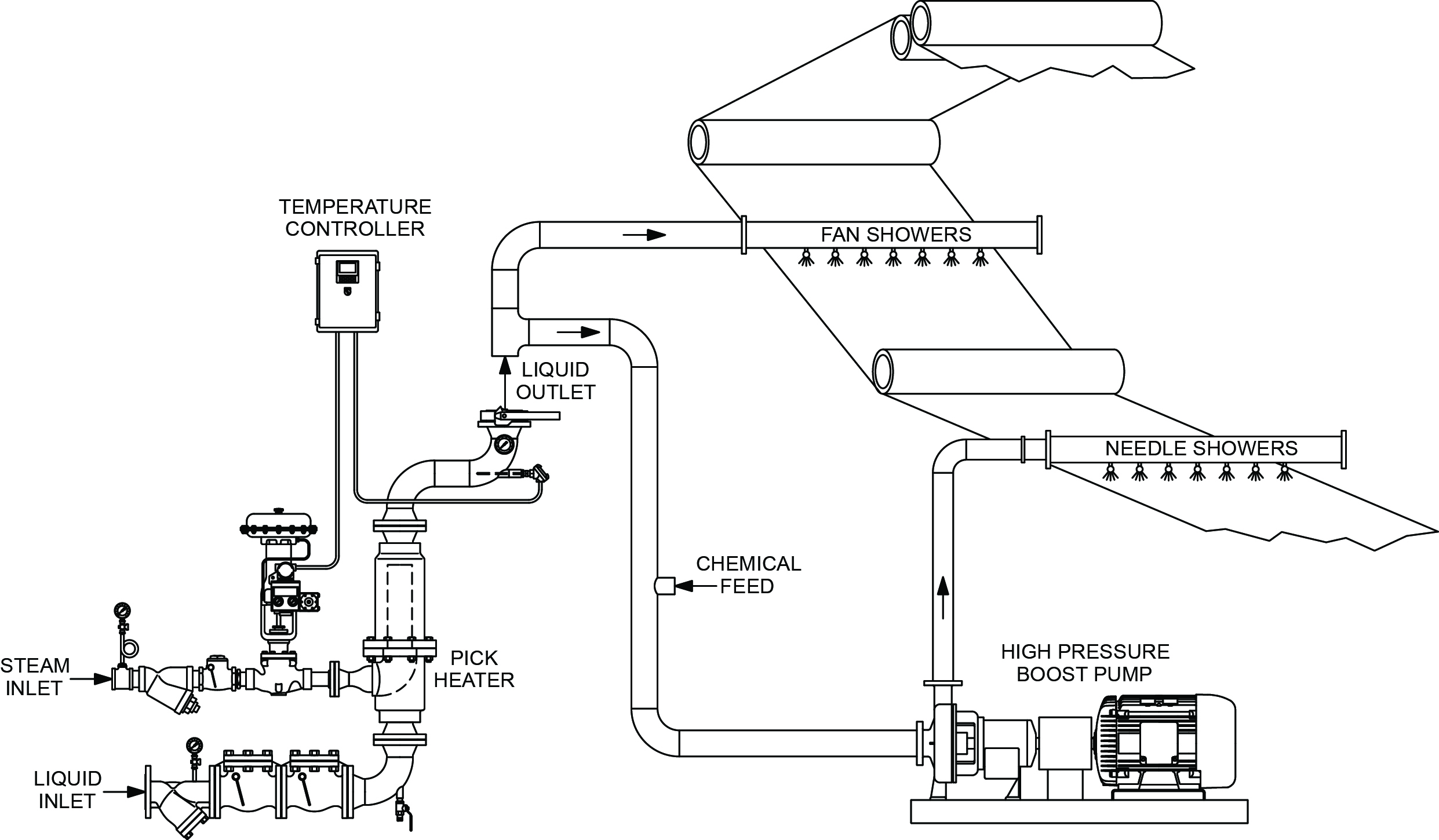
A real-world felt shower installation at a paper mill illustrates this clearly. The mill required a reliable source of precisely controlled hot water to thoroughly loosen and flush fiber and fillers from the felts. The goal was to maximize water removal in the press section and at the same time increase felt temperature. The result was improved dryer section efficiency and machine run-ability - exactly the efficiency chain Neun described in Part One.
In this application, the shower water setpoint was 160°F, the temperature at which detergents and dispersants work most effectively. The incoming water required a 100°F temperature rise at a flow rate of 100 GPM, which translated to a steam demand of approximately 4,300 lb/hr.
Why a Direct Steam Injection Heater Fits This Application
Meeting those process conditions consistently requires a heater that can respond quickly to changes in flow or incoming water temperature and maintain setpoint without hunting or overshooting. Direct steam injection heaters are well-suited to handle this kind of duty. Unlike heat exchangers, which transfer heat indirectly across a heat transfer surface and can lag behind process changes, a DSI heater introduces steam directly into the water stream, providing essentially instantaneous heat transfer. Response is immediate.
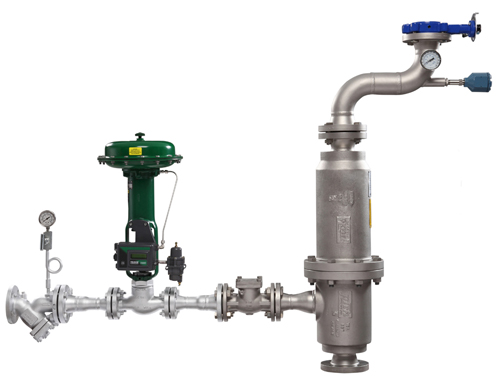
For the felt shower application described above, Pick Heaters supplied a Model 6X50-3 Constant Flow Heater with an RTD for temperature feedback through the mill's DCS controls. The unit provided automatic operation and smooth, quiet performance — important in a paper mill environment where mechanical noise can mask process problems and operators are working in close proximity to the equipment. Precise temperature control kept the shower water at the 160°F setpoint, giving the chemical program the thermal conditions it needed to do its job.
Another successful Pick installation involves a customer where seasonal mill water temperatures called for a wide turndown in heat load. The Pick Model 6X200-3 was installed, capable of upwards to 23,000 lb/hr steam flow during the winter but was still able to run smoothly during the summer demand at loads as low as 4000 lb/hr steam flow. This customer is coming up on 25 years of service with the original heater. Pick provides both dependability and durability.
Pick Constant Flow Heater
Connecting Equipment Performance Back to Machine Efficiency
It's worth stepping back to connect these equipment-level details to the broader efficiency picture Neun outlined. He noted that a 1% improvement in press solids reduces dryer steam consumption by roughly 4%, citing TAPPI TIP 0404-63. He also estimated that under conditions where shower water is significantly cooler than the sheet, the press efficiency loss could amount to 2% or more in solids - translating to an 8% or greater reduction in dryer steam if that gap is closed.
Achieving and sustaining those gains depends on keeping shower water at a consistent target temperature around the clock, not just during ideal conditions. A heater that drifts, overshoots, or trips offline during demand spikes undermines efficiency. The instantaneous response of a direct steam injection heater means the setpoint is maintained whether flow is steady or variable, and whether the incoming water temperature changes with the seasons.
A Practical Starting Point
For mills evaluating whether shower water heating makes economic sense, Neun recommended a simple preliminary check: compare felt temperature to sheet temperature and look at how much the sheet cools after the press nip. If there's a significant gap, the potential for improvement is real. The investment in heating equipment needs to be weighed against the downstream steam savings and any runnability improvements - but as Neun's numbers show, even a modest shower flow at a significant temperature deficit can represent a six-figure annual energy cost.
Pick Heaters has worked for decades with pulp and paper mills across a range of shower water heating applications, from felt conditioning to forming and press section showers, as well as headbox and wire showers. For more information about heater sizing and application support, contact Pick Heaters at 262-338-1191.
Read part one: Improved Paper Machine Efficiency through Shower Water Heating - An Interview with John Neun - Consulting Engineer