Hot Water Heating Solutions for Industrial Plant Engineers: Why Smart Plants Choose Steam Injection
A practical guide to evaluating water heating options across industrial process applications.
The Critical Role of Hot Water in Industrial Processes
Hot water is a foundational utility in modern industrial plants. Across food processing, chemical manufacturing, pharmaceutical production, pulp and paper mills, and countless general industrial applications, a reliable supply of hot water at a precise temperature, pressure, and flow rate is essential for maintaining product quality, meeting regulatory standards, and keeping production moving.
The wrong choice here isn’t just an efficiency problem, it can mean production stoppages, compliance failures, or costly maintenance down the line. An undersized or poorly controlled system creates bottlenecks. Difficult-to-maintain equipment introduces unplanned downtime. In heavily regulated industries like food and pharmaceutical, specifying the wrong technology can trigger quality issues that are expensive to correct.
Plant engineers navigating these decisions have several technologies to evaluate. This guide is a transparent examination of why direct steam injection consistently proves to be the most efficient and reliable choice for facilities where steam is available.
Industrial Water Heating Technologies: An Honest Comparison
The four primary methods that plant engineers encounter are direct steam injection heaters, indirect heat exchangers, tank spargers, and gas-fired heaters. Each has genuine use cases, and each carries real tradeoffs.
1. Direct Steam Injection Heaters
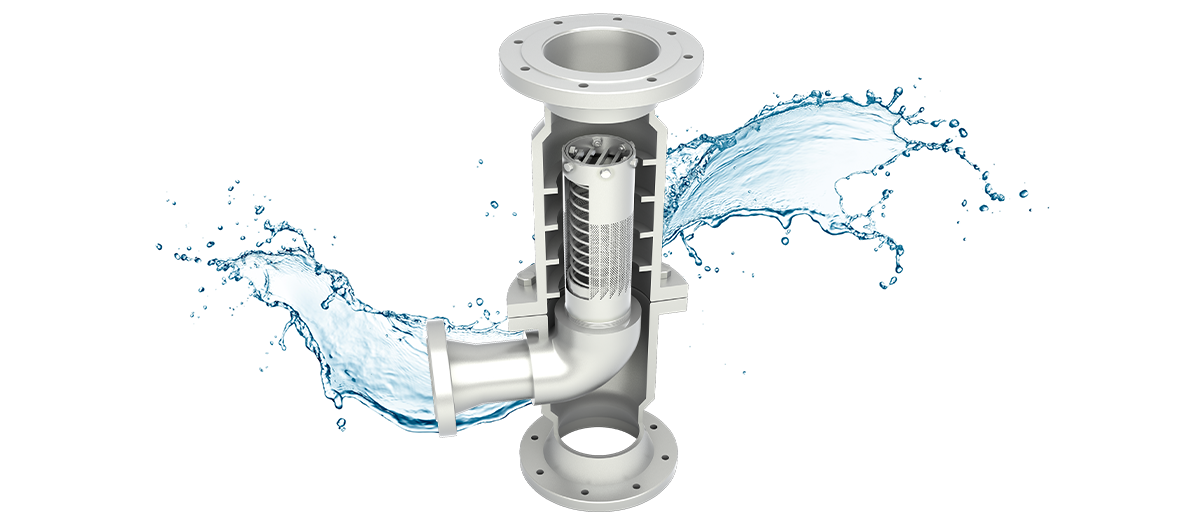
In a direct steam injection heater, medium- to high-pressure steam is injected directly into a flowing water stream, where it condenses completely. Because the steam condenses into the process water rather than transferring heat across a surface, virtually all of the steam’s thermal energy - including its sensible heat of condensation - is absorbed by the water. This makes direct steam injection one of the most thermally efficient water heating methods available.
Engineered direct steam injection heaters, as opposed to simple open-pipe spargers, use precisely designed mixing chambers to eliminate water hammer, control noise, and deliver accurate outlet temperatures - often within ±1°C of the setpoint when paired with an automated control valve and temperature feedback loop.
Key advantages include:
• 100% thermal efficiency: all steam is condensed directly in the process stream and requires no condensate return systems. Heat transfer surfaces such and plate packs or tube bundles are eliminated
• Unlimited hot water supply: output is limited only by available steam capacity, not tank capacity or heat exchanger surface area.
• Rapid response: the heater reacts almost instantly to demand changes - well-suited for variable or batch processes. As an example, in food processing a clean-in-place (CIP) cycle demands hot water at set-point on short notice. Instant response is a practical advantage that a tank-based system simply can’t match.
• Precise temperature control: engineered systems with modulating control valves and instrumented control loops can hold outlet temperature within ±1°C.
• No heat transfer surface to foul or corrode unlike heat exchangers, there are no plates or tubes that scale or degrade over time, which significantly reduces maintenance.
• Compact footprint: direct steam injection heaters are considerably more compact than shell-and-tube heat exchangers of equivalent capacity.
• Hygienic design options: for food and beverage applications, units designed for culinary or clean steam with easy-to-clean designs.
2. Indirect Heat Exchangers
An indirect heat exchanger transfers heat between two fluids - typically steam or hot water on the primary side and process water on the secondary side - without the fluids coming into direct contact. Common types include shell-and-tube, plate-and-frame, and spiral heat exchangers.
Indirect heat exchangers are the right choice when the two fluids must remain completely separated. Typical cases are when the product being heated cannot allow any dilution. Other process that fit indirect heat exchangers is when the plant is limited to lower pressure steam.
There are inherent limitations plant engineers should factor in:
• Terminal temperature difference: the process fluid outlet can never quite reach the heating medium temperature, which limits the maximum achievable process temperature for a given steam pressure.
• Fouling and maintenance: heat transfer surfaces accumulate scale over time, reducing efficiency and requiring periodic cleaning - planned and unplanned.
• Larger footprint: indirect heat exchangers rely on a heat transfer barrier, more material that results in larger unit that require significant floor space compared to inline steam injection heaters.
• Requires method of condensate return: to properly remove condensate from the heat exchanger and return to boil feed - a trap, condensate pump and associated piping is required. Condensate return systems are not 100% efficient and carry upfront capital and ongoing maintenance costs.
3. Tank Spargers
A tank sparger introduces steam into a liquid within a storage tank through a perforated pipe or diffuser, creating steam “bubbles” that condense and heat the tank contents over time. Steam sparging is itself a form of direct steam injection - the distinction is that spargers operate as open-discharge devices inside a vessel, rather than as controlled inline heaters.
Spargers are simple and low in capital cost, but the operational limitations are real:
• Water hammer and noise: open spargers allow for the sudden collapse of steam in the vessel resulting in a potentially damaging pulsation and objectionable noise.
• Energy inefficient: as tank temperature increases more steam will tend to escape to the atmosphere resulting in a waste of steam energy.
• Not suitable for continuous-flow applications: spargers heat a batch of liquid in a tank; they’re not designed for inline, continuous-flow water heating.
• Condensate dilution: steam condensing into the tank adds volume that must be accounted for in process design.
4. Gas-Fired Heaters
Gas-fired water heaters use natural gas or propane combustion to heat water, either directly or through a heat exchanger. They’re common in facilities without access to a plant steam system and are more energy-efficient than electric resistance heating. Their best fit is in facilities without plant steam, or remote installations where steam infrastructure would be cost-prohibitive.
Where gas-fired systems seem to make sense, some drawbacks need to be considered:
• Combustion infrastructure: gas supply lines, burners, combustion controls, and flue/exhaust systems, large holding vessels all add capital cost and ongoing maintenance.
• Ventilation and emissions: proper exhaust ventilation is mandatory; larger installations may also be subject to EPA air quality regulations.
• Safety compliance: combustion equipment requires compliance with NFPA standards and applicable building codes.
• Slower response: gas-fired heaters react more slowly to demand changes than direct steam injection systems. Supplemental heaters are often required when temperature requirements are not satisfied.
Key Factors When Selecting an Industrial Water Heater
No two plants are identical. Before specifying a water heating system, it’s worth working through the following factors systematically, each one can meaningfully change which technology is the right fit.
Do You Have Steam Available?
This is often the single most important question. If your facility already operates a steam distribution system - as is common in food processing, chemical plants, and pulp and paper mills - direct steam injection is almost always the most efficient and cost-effective choice. If steam is not available or would require significant new infrastructure, gas-fired or indirect hot water systems become more competitive.
Know Your Demand Profile
Accurately characterizing demand is foundational to correct equipment sizing. Define your peak and average flow rates, required outlet temperature and acceptable variation, inlet water temperature range across seasons, and whether demand is continuous, intermittent, or batch driven. Systems sized only for average demand get overwhelmed at peak; systems sized purely for peak may operate inefficiently day-to-day. Turndown ratio - the ability to modulate output efficiently across a wide load range - matters more than many engineers initially expect.
Think in Lifecycle Costs, Not Just Capital Costs
Operating costs over a system’s life frequently dwarf the purchase price. Direct steam injection heaters, with no heat transfer surface losses, deliver the highest thermal efficiency available for steam-based heating. Indirect heat exchangers suffer efficiency penalties from fouling that compound if cleaning is deferred. Gas-fired systems add combustion efficiency as a variable. In each case, a realistic ten-year operating cost estimate often tells a very different story than a purchase price comparison alone.
Steam Purity Matters in Regulated Industries
In direct steam injection, steam condenses directly into the process water - so whatever is in the steam enters the water. For general industrial applications, standard boiler steam with approved chemical treatment is usually fine. For food processing, beverage production, and pharmaceutical manufacturing, however, culinary steam or clean steam may be required. These are produced adhering to boiler feed chemical requirements and meeting applicable design and filtration standards. If your plant falls into a regulated category, this is a non-negotiable evaluation point.
Factor in Maintenance Honestly
Unplanned downtime in a production environment is expensive - sometimes far more expensive than the water heater itself. How frequently do components require inspection or replacement? What happens if the system fails mid-shift? Direct steam injection heaters, with no fouling heat transfer surfaces and relatively few moving parts, generally offer a favorable maintenance profile. Gas-fired systems require regular burner inspection, flue cleaning, and combustion safety system checks. Heat exchangers need periodic cleaning that can require production shutdowns.
Don’t Overlook Noise and Water Hammer
Water hammer - pressure surges caused by steam condensing unevenly in a liquid stream - can be a serious concern with older or poorly designed steam injection approaches, including conventional open spargers. The mixing chamber in an engineered steam injection heater is precision-designed so steam condenses quietly and evenly, with no pressure surges. Ask any supplier you’re evaluating to explain specifically how their design addresses this. If they can’t give you a clear answer, that tells you something.
Know Your Regulatory Requirements Before You Specify
Depending on the industry and jurisdiction, industrial water heating systems may be subject to OSHA pressure vessel and piping regulations, FDA or USDA sanitary equipment requirements, EPA air emissions regulations for combustion equipment, and NFPA fire and building codes for gas-fired systems. Identifying applicable requirements early avoids expensive redesigns later.
Account for the Full Installed Cost
The purchase price of the heater itself is rarely the whole story. Direct steam injection heaters are compact and straightforward to install where steam is already available - typically requiring steam supply, process water connections, and a control valve. Gas-fired systems require fuel supply infrastructure, combustion exhaust systems, tanks and safety controls. Indirect heat exchangers add primary loop piping, pumps, expansion tanks, and return condensate systems. Get a full installed-cost estimate before comparing options on price.
The Case for Direct Steam Injection
When steam is available, direct steam injection heating is difficult to beat. The physics are straightforward: condensing steam directly into the process stream captures both sensible and latent heat with no surface losses, delivering efficiency that indirect systems simply cannot replicate. Add precise temperature control, a low-maintenance design that doesn’t degrade over time, and a compact footprint - and the value is clear for most steam-equipped plants.
For food, pharmaceutical, and beverage applications, the sanitary design advantage is equally compelling. Sanitary systems provide the same advantages of industrial steam injection systems and are readily acceptable for both water heating and product cooking.
For facilities without existing steam infrastructure, the calculus shifts - and gas-fired or indirect systems using an alternate heat source may be the right answer. But for the majority of industrial plants in food, chemical, pharmaceutical, and pulp and paper sectors, where steam is already part of the utility network, direct steam injection offers a combination of efficiency, reliability, precision, and simplicity that other technologies struggle to match.
Choosing the Right Solution for Your Plant
Every plant is different. The best water heating solution is the one that reliably meets your specific flow rate, temperature, and quality requirements - at the lowest total cost of ownership over its service life. Getting there means asking the right questions early, evaluating technologies on lifecycle economics rather than purchase price, and understanding the regulatory and maintenance realities of each option.
If you’re evaluating water heating options for your plant, our engineers are happy to work through the specifics with you. Contact Pick Heaters to get started.